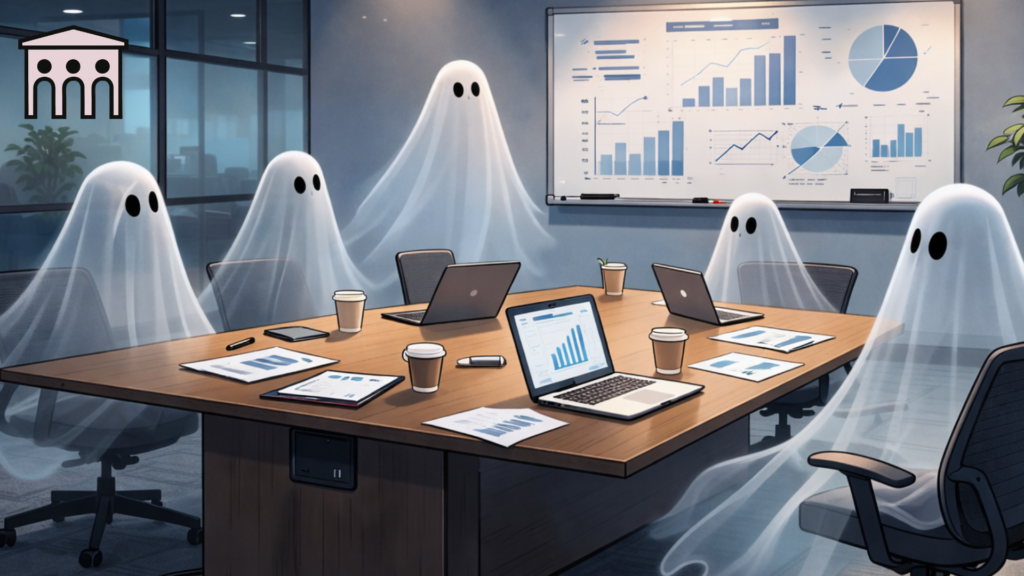
Anonymity in professional communities creates psychological safety, sharper thinking and more honest industry dialogue. When identity is removed from the equation, ideas can breathe, without the pressure of performance.
It is refreshing when you do not need to perform – for an algorithm or an audience. In most modern professional spaces, visibility is currency. Opinions are shaped not only by what we think, but by how they will be perceived. Titles sit behind sentences. Personal brands sit behind names. The result is often careful speech rather than candid thought. This blog explores 15 benefits of anonymous professional communities and why anonymity lies at the heart of the Ghost Lounge.
Benefits of Anonymity in Professional Communities
Anonymity is often misunderstood. It is not about hiding. It is about removing external pressure. In the right environment, anonymity does not reduce accountability – it increases honesty. When identity is neutralised, status matters less than substance and insights carry more weight than job titles. Performance gives way to presence, and ideas can be tested before they are polished. The following 15 reasons explain why anonymity creates better conditions for professional dialogue.
Psychological Safety
- Share unfiltered thoughts. Say what you really think. Allow your internal editor to step to one side and speak your truth without consequence.
- Stop performing. Leave your personal brand at the door. When your name no longer sits behind every sentence, you can stop worrying about external perception.
- Share your battles. You’re not struggling alone. Hearing others name the same pressures lightens the load that you’ve been carrying in silence.
- Mental health benefits. A safe emotional outlet. When you drop the impeccably composed façade, expressing your emotions offers release.
- Hear from the quiet majority. Insights from silent thinkers. Hoteliers observe more than they speak, often only revealing their insights behind closed doors.
Psychological safety is not accidental. It emerges when reputational risk is lowered. In anonymous environments, leaders can express uncertainty and admit doubt without consequence. That shift alone changes the quality of dialogue.
Clarity of Thought
- High signal, low noise. Only thoughtful contributions. A space lacking in noise allows you to distil ideas and contemplate before you share.
- A structured environment. One curated daily prompt. A single focus each day. One question / statement provides a shared centre of gravity around which insights may orbit.
- Explore bad ideas. Innovation starts imperfectly. When space is provided for messy and half-formed ideas, early-stage originality is not extinguished.
- Calibrated leadership decisions. Better choices, faster clarity. Elevate your thinking by testing assumptions and refining conclusions with your peers.
- Avoid digital overwhelm. No pressure. Engage with clarity whenever you have the headspace. Once. If the topic speaks to you. Messages disappear after seven days.
Professional thinking improves when cognitive load decreases. A focused, moderated structure reduces distraction. Without the pressure to post frequently or build visibility, participants can contribute deliberately rather than reactively. Anonymity supports this discipline. When ideas are not attached to reputation, they can be explored more freely and refined more rigorously.
Industry Transparency
- Cross the brand divide. Avoid isolated thinking. Narrow brand-think can create invisible boundaries and stifle individual expression.
- Cross-functional learning. Insight from every department. General managers can participate (or listen) in nine functional rooms (F&B, Marketing, etc).
- Ego-free moderation. Every voice is equal. Conversations are richer when no one dominates and everyone feels safe. Ideas stand on their own merit.
- Experts with no agenda. Pure expertise, zero pitch. Because expert insights are far more valuable when they come with no ulterior motive.
- Private community. Playful curiosity. When there are no guests in the audience, hoteliers can drop the guard that public spaces demand. They can play with ideas.
When identity and brand allegiance are softened, industry dialogue becomes more transparent. Participants are less defensive and more willing to challenge assumptions – including their own. Transparency does not require publicity. In many cases, it requires privacy.
Why Anonymity Improves Professional Dialogue
Anonymity changes behaviour in subtle ways. It reduces impression management, lowers reputational anxiety, weakens hierarchy and strengthens listening. In public professional spaces, contribution can feel performative. In anonymous spaces, contribution can feel exploratory. That distinction matters. When people are freed from the need to signal expertise, they are more likely to demonstrate it.
Frequently Asked Questions
Is anonymity safe in professional communities?
When properly moderated and structured, an anonymous community can reduce reputational risk and discourage dominance based on status.
Does anonymity reduce accountability?
Not necessarily. Clear behavioural expectations and active moderation ensure that ideas are expressed responsibly while protecting identity.
Why does anonymity improve psychological safety?
Because it lowers the perceived consequences of speaking honestly. When identity is shielded, participants are more willing to express uncertainty, vulnerability and dissent.
Are anonymous communities better than public platforms?
They serve different purposes. Public platforms amplify ideas. Anonymous communities refine them.
In a world increasingly shaped by visibility, anonymity offers something rare: space to think, question and speak without performance. And sometimes, that is where the best ideas begin.
*******
Note: This post was co-written by my AI agent. I was an HR/Recruitment Ghostwriter for more than a decade. You can check out 100+ “old” blogs here. These days, I no longer write for clients, and I choose to use AI to assist my personal writing process. The thoughts are mine. The words are a joint effort.